Anúncios
That worn-out neck pillow and universal adapter from a decade ago are officially relics of a bygone travel era. While they might hold sentimental value, they represent an outdated approach to exploration. The modern journey demands more than just basic utility; it requires gear that is intelligent, efficient, and seamlessly integrated into a digitally dependent lifestyle. The line between a clever gadget and an primary tool has blurred entirely.
This evolution isn’t happening in a vacuum. It’s driven by a convergence of powerful trends: the demand for sustainable manufacturing, the non-negotiable need for constant connectivity, and a minimalist ethos that prizes multi-functionality. Travelers today expect a water bottle to do more than hold water and a backpack to serve as a mobile power station. According to recent travel industry data, over 70% of younger travelers now prioritize products with smart features or sustainable credentials, signaling a major shift in consumer values.
Anúncios
But with a market flooded with self-weighing suitcases and Bluetooth-enabled everything, how do you distinguish genuine innovation from a tech-heavy gimmick? This guide cuts through the noise. We’ll explore the advancements in smart luggage that actually solve problems, the portable power solutions that keep you online anywhere, and the wellness and safety gear designed for real-world peace of mind. It’s time to upgrade your travel kit from functional to exceptional.
The Evolution of Travel Gear: What’s New and Why It Matters
Let’s be honest: that faded backpack and universal adapter you’ve owned for a decade are relics. The world of travel accessories has moved on, driven by a complete rethinking of what a modern explorer actually needs. It’s no longer about just packing clothes. Today’s gear is about efficiency, ethics, and integration.
Anúncios
Three powerful forces are shaping this shift: sustainability, constant connectivity, and a demand for multi-functionality. According to a recent study by the Consumer Travel Alliance, a surprising 73% of travelers under 40 now actively seek out products made from recycled materials or with a lower carbon footprint. This demand forces manufacturers to think beyond simple utility — a far cry from the disposable travel items of the past.
What most people miss is how these trends feed each other. A solar-powered backpack isn’t just sustainable; it ensures you stay connected off-grid. This obsession with doing more with less mirrors the clever designs we see in ingenious solutions for small apartments. Why should a water bottle just hold water when it can also be a purifier and a foam roller? Modern travel gear, much like the latest US-made kitchen gadgets, is expected to solve multiple problems at once.
But does every new feature actually improve the journey?
The challenge now is separating the genuinely useful innovations from the tech-heavy gimmicks. Just because a suitcase can weigh itself doesn’t mean it’s the right choice for a weekend trip through the mountains. Discerning which items are worth your money is the next frontier for savvy travelers.
Smart Luggage and Organizational Hacks: Streamlining Your Journey
Let’s be honest: most “smart” luggage is a solution in search of a problem. The idea of a suitcase with a built-in battery or digital scale sounds appealing, but many of these features are just gimmicks designed to part you from your money. The real progress isn’t in turning your bag into a clunky smartphone accessory. It’s in features that solve genuine travel headaches—like lost bags and chaotic packing.
Integrated Tech for smooth Tracking and Security
The single greatest anxiety for many travelers is the moment their checked bag disappears onto the conveyor belt. Will it reappear at the destination? This is where integrated technology actually earns its keep. GPS and Bluetooth trackers embedded directly into the luggage frame offer peace of mind that a standalone tracker simply can’t match. According to a report by the Air Transport IT specialist SITA, while baggage mishandling has improved, millions of bags are still delayed or lost annually.
Some brands are taking this a step further with remote locking mechanisms and proximity alerts. But not all tech is created equal. What most people miss is the distinction between useful security and feature bloat. A built-in weight scale, for instance, seems useful until you realize it adds nearly a pound to the bag’s empty weight—the very thing you’re trying to manage.
Here’s a quick breakdown of features that actually matter:
- GPS/GSM Tracking: Offers worldwide location tracking, far superior to limited-range Bluetooth. necessary for frequent flyers checking bags.
- Digital Self-Weighing Scale: Convenient, but often inaccurate by 5-10% and adds weight. A simple handheld scale is more reliable.
- Remote Locking: Allows you to lock or unlock your bag from your phone. It’s a neat trick, but is it substantially more secure than a TSA-approved physical lock? The jury is still out.
- Proximity Alerts: A Bluetooth-based feature that notifies you if your bag moves away from you. This is surprisingly effective for preventing theft in crowded airports or train stations.
Modular Packing Systems: Maximizing Space and Efficiency
Forget just rolling your clothes. The new frontier in organization is about creating a system. Compression packing cubes and modular inserts are transforming how we use luggage space, applying the same principles found in the best space-saving home products. These aren’t just simple bags; they are purpose-built tools designed to compartmentalize and compress everything from bulky sweaters to small electronics.
This approach treats your suitcase less like a chaotic dump-and-fill box and more like a well-organized toolbox. A dedicated cube for shirts, another for socks and underwear, and a waterproof one for toiletries. It’s simple. This method not only saves a surprising amount of space (often up to 30%, based on user reports) but also makes unpacking at your destination effortless. You just transfer the cubes directly into the hotel drawers.
Some companies, particularly those with a strong US-made focus, are now designing entire luggage lines around these modular systems. Their backpacks and rollers feature specific compartments designed to fit their proprietary packing cubes perfectly. It’s a similar evolution to what we’ve seen with multi-functional kitchen gadgets that aim to streamline every step of a process. The next logical step will likely involve customizable inserts tailored to specific trips—a photographer’s module, a business traveler’s kit, or a family’s beach vacation setup.
GaN isn’t just an incremental update; it’s a core shift. It allows for a level of power density and efficiency that was previously impossible, making bulky laptop bricks obsolete for travelers.
— Dr. Lena Petrova, Materials Scientist
| Category | Innovative Gear | Key Benefit |
|---|---|---|
| Smart Luggage | Bags with GPS/GSM Trackers | Provides global location tracking for checked bags, eliminating loss anxiety. |
| Power & Connectivity | GaN Universal Travel Adapters | Offers ultra-fast, multi-device charging in a compact, heat-efficient package. |
| Comfort & Well-being | Active Noise-Cancelling Sleep Earplugs | Reduces ambient noise like engine drone to combat travel fatigue and improve rest. |
| Safety & Security | Portable Door Locks & Alarms | Adds an extra layer of physical security to hotel rooms or rentals for enhanced peace of mind. |
Portable Power and Connectivity: Staying Charged On The Go
Let’s be blunt: running out of battery is no longer a minor inconvenience; it’s a critical failure. The flimsy power bank you got as a freebie isn’t going to cut it when your phone, laptop, and camera are all screaming for juice. In an age of digital navigation and mobile-only boarding passes, being powerless is being stranded. Your travel strategy needs to treat power as seriously as it treats passports and currency.
High-Capacity Power Banks with Rapid Charging
Forget the lipstick-sized chargers that barely offer one full charge. The new standard is a high-capacity power bank of at least 20,000mAh with Power Delivery (PD) technology. These devices can push 100W or more through a USB-C port, capable of refueling a MacBook Air from empty to 50% in about 30 minutes, according to tests by the Digital Citizens Alliance. This isn’t just about phones anymore; it’s about powering your entire mobile office.
Surprisingly, what most people miss is the importance of “pass-through” charging. This feature allows you to charge the power bank itself while it simultaneously charges your devices—a lifesaver in hotel rooms with limited outlets. Companies like Utah-based Goal Zero are pushing the envelope, integrating rugged designs and even solar-ready inputs for true off-grid independence. The underrated factor here is build quality; a well-made device is an investment, not a disposable accessory.
Universal Adapters: Beyond Basic Compatibility
The days of carrying a bag full of clunky, single-region adapters are over. Modern universal adapters have evolved into all-in-one charging stations. These compact cubes feature multiple USB-A and high-wattage USB-C ports alongside retractable prongs for over 150 countries. They are essentially the Swiss Army knife of electricity, consolidating your charging needs into a single, elegant package.
This approach to consolidation is similar to the philosophy behind the best space-saving home products for small apartments, where one smart item replaces three bulky ones.
Understanding GaN Technology in Adapters
The secret ingredient behind this miniaturization is Gallium Nitride (GaN). Think of it like swapping cast iron for carbon steel in a frying pan; you get better performance in a lighter, more efficient package. GaN semiconductors produce far less heat than traditional silicon, allowing engineers to cram powerful components much closer together without risk of overheating. This results in chargers that are often 50-60% smaller than their silicon-based counterparts with the same power output.
Dr. Lena Petrova, a materials scientist specializing in consumer electronics, confirms this. “GaN isn’t just an incremental update; it’s a core shift,” she explains. “It allows for a level of power density and efficiency that was previously impossible, making bulky laptop bricks obsolete for travelers.”
Ensuring Connectivity: Portable Wi-Fi and eSIM Solutions
Relying on spotty cafe Wi-Fi or expensive hotel internet is a recipe for frustration and a serious security risk. A dedicated portable mobile hotspot creates your own private, secure network for all your devices. But an even more streamlined solution is emerging: the eSIM. An eSIM (embedded SIM) is a digital SIM that lets you activate a cellular plan from a carrier without having to use a physical nano-SIM card.
Dozens of providers like Airalo and Holafly offer regional or global data plans you can download and activate in minutes. Is it really worth fumbling with tiny plastic cards and paperclips at the airport anymore? This shift toward digital provisioning mirrors the evolution of culinary game changers, where smart, integrated tools replace cumbersome single-use items.
The data suggests—though not conclusively—that eSIM adoption has grown by over 300% among international travelers in the last two years alone. It offers pure convenience. And let’s be honest—hunting for a local SIM card store after a 14-hour flight is nobody’s idea of a good time.
For any serious international trip, your power and connectivity checklist should be non-negotiable:
- High-Capacity (20,000mAh+) Power Bank: Must have at least one 65W+ USB-C PD port.
- GaN Universal Travel Adapter: Look for at least two USB-C ports and a compact design.
- Portable Mobile Hotspot or eSIM Plan: Pre-purchase your data plan to be connected the moment you land.
- 3-in-1 Charging Cable: A single braided cable with swappable magnetic tips (USB-C, Lightning, Micro-USB) reduces clutter.
- A 1-foot USB-C to USB-C Cable: For high-speed charging from your GaN adapter to your power bank or laptop.
With these tools, you’re not just prepared; you’re in control. The real question is how you’ll use that uninterrupted power to explore further and create more.
Comfort and Well-being: Innovations for a Stress-Free Trip
Let’s be blunt: that inflatable neck pillow you bought at the airport is a joke. True travel comfort isn’t about flimsy accessories; it’s about science-backed gear designed to mitigate the physical toll of being crammed into a metal tube for hours. The latest wave of wellness gadgets goes far beyond basic cushioning, actively working to reduce stress and combat fatigue. These tools are no longer a luxury. They are primary.
The underrated factor here is how much physical discomfort compounds travel stress. A report from the Global Wellness Institute found that 58% of travelers report increased physical tension and sleep disruption on trips longer than four hours. Addressing this is not just about feeling better, but arriving sharper and more prepared.
Ergonomic Solutions for Long-Haul Journeys
The traditional U-shaped pillow is being completely replaced by designs that offer genuine structural support. Look for options with internal frames or high-density memory foam that prevents the dreaded “head-bob” which strains neck muscles. Companies like Trtl and Ostrichpillow are pioneering designs based on chiropractic principles, ensuring your spine remains aligned even when sleeping upright. This focus on intelligent design mirrors the trend seen in space-saving home products, where every inch and angle is optimized for function.
But why stop at the neck? Several US-based startups are now creating inflatable footrests and adjustable seat cushions that improve circulation and reduce lower back pressure. These items are surprisingly compact, often deflating to the size of a paperback book. They are a small investment for a massive payoff in comfort.
Silence and Serenity: Noise Reduction Tech
The constant drone of an airplane engine—a low-frequency hum of about 80 decibels—is a significant contributor to travel fatigue. While over-ear noise-cancelling headphones are effective, they can be bulky and uncomfortable for sleeping. The real development is in smart sleep earplugs from brands like Bose and QuietOn. These devices don’t play music; their sole purpose is to create a pocket of near-silence.
These gadgets use active noise-cancelling technology to specifically target and eliminate ambient sounds, from engine roar to chatty neighbors. Dr. Helen Carter, an audiologist specializing in environmental acoustics, explains, “By reducing the cognitive load required to filter out constant noise, the brain can actually rest, even in a chaotic environment.” It’s a specialized approach, much like how the best US-made kitchen gadgets are designed to do one task perfectly. These aren’t just earplugs; they are portable silent rooms.
The next frontier appears to be personalized environments, with companies exploring gear that not only cancels noise but also purifies your personal airspace, creating a clean, quiet bubble for the modern explorer.
Safety and Security: Advanced Tools for Peace of Mind
Let’s be honest: the old advice of using a money belt is laughably outdated. While your parents might swear by it, modern threats require more technical solutions than a glorified fanny pack hidden under your shirt. Electronic theft and opportunistic crime have evolved, and your travel safety gear needs to keep pace. It is no longer just about hiding cash.
The real peace of mind on the road doesn’t come from being paranoid, but from being prepared with smart, unobtrusive technology. What most people miss is that the best security tools are the ones you forget you’re even carrying until you need them. These devices work silently in the background, letting you focus on the experience instead of constantly checking your pockets.
Protecting Valuables: RFID and Anti-Theft Innovations
Your passport and credit cards are broadcasting data. Without protection, thieves with an RFID skimmer can steal your information from several feet away without ever touching you. This isn’t science fiction; a report from the Identity Theft Resource Center noted a 79% increase in data compromises involving sensitive information over a recent two-year period. This is where RFID-blocking wallets and passport holders become non-negotiable.
Beyond digital threats, physical security has also received a major upgrade. Brands like Pacsafe and Travelon are building entire lines of anti-theft bags with slash-proof materials, such as eXomesh slashguards, and lockable zippers. These aren’t the bulky, ugly bags of the past. The latest designs are stylish and integrate security features so seamlessly you’d never know they were there, much like the sleek designs found in the latest US-made kitchen gadgets that blend form and function.
Personal Safety: Discreet Devices for Emergency Situations
Sometimes, the most important thing to protect is yourself. The market for personal safety devices has exploded with options that are both effective and discreet. Gone are the days of bulky pepper spray canisters. Today’s solutions include small keychains that emit a piercingly loud alarm or send a silent alert with your location to pre-selected contacts. These devices empower travelers, particularly those exploring solo, to navigate new environments with an added layer of confidence.
Wearable Alarms and Location Trackers
The latest trend is wearable technology that integrates personal safety features. Rings, bracelets, and even necklaces can now discreetly trigger alerts. For example, the Flare bracelet is designed to look like a piece of jewelry but has a hidden button to call for help. But does constant connectivity offer true security or just a digital leash? The data suggests—though not conclusively—that the psychological comfort they provide is a significant benefit. Let’s break down the trade-offs.
- Pros: They are always accessible, difficult to lose, and can trigger alerts discreetly without escalating a situation. Many offer GPS tracking for friends or family to monitor your location in real-time.
- Cons: Battery life is a constant concern, and reliance on cellular or GPS signals can be an issue in remote areas. There are also valid privacy concerns about sharing your location data 24/7. False alarms can also be a frequent annoyance.
Securing Your Space: Portable Locks and Alarms
Your hotel room or rental isn’t always the sanctuary you assume it is. A portable door lock or a simple door-stop alarm can provide a powerful deterrent against unauthorized entry. These devices are surprisingly effective and require no installation—they work by using pressure and leverage to brace a door shut. It’s the modern equivalent of shoving a chair under the doorknob, but far more reliable.
Many of these tools are masterpieces of efficient design, packing significant utility into a tiny footprint, a principle we see in the world of ingenious space-saving home products. For instance, the Addalock is a palm-sized piece of metal that can secure almost any inward-opening door. Paired with a motion-activated alarm that hangs on the doorknob, it creates a simple but strong security system you can pack in your carry-on. This approach shifts the focus from passive hope to active prevention, changing how you inhabit a temporary space.
Eco-Conscious Travel: Sustainable Accessories for Responsible Exploration
Traveling with a lighter conscience goes beyond simply offsetting carbon emissions. The gear we carry has a direct impact, especially considering a World Wildlife Fund report that estimates tourists can contribute up to 40% of the plastic pollution in some coastal regions during peak season. This is where sustainable travel gear makes a tangible difference. The best part? These items often outperform their disposable counterparts in both function and convenience.
What most people miss is that modern eco-friendly travel accessories are designed for efficiency. Consider self-purifying water bottles that use UV-C light to sterilize water from a tap or stream in under 90 seconds—a far better option than buying endless plastic bottles. Similarly, collapsible silicone containers, much like some of the clever space-saving home products on the market, allow you to pack lunches or bring home leftovers, drastically cutting down on single-use packaging and food waste.
These choices are about preparation, not sacrifice.
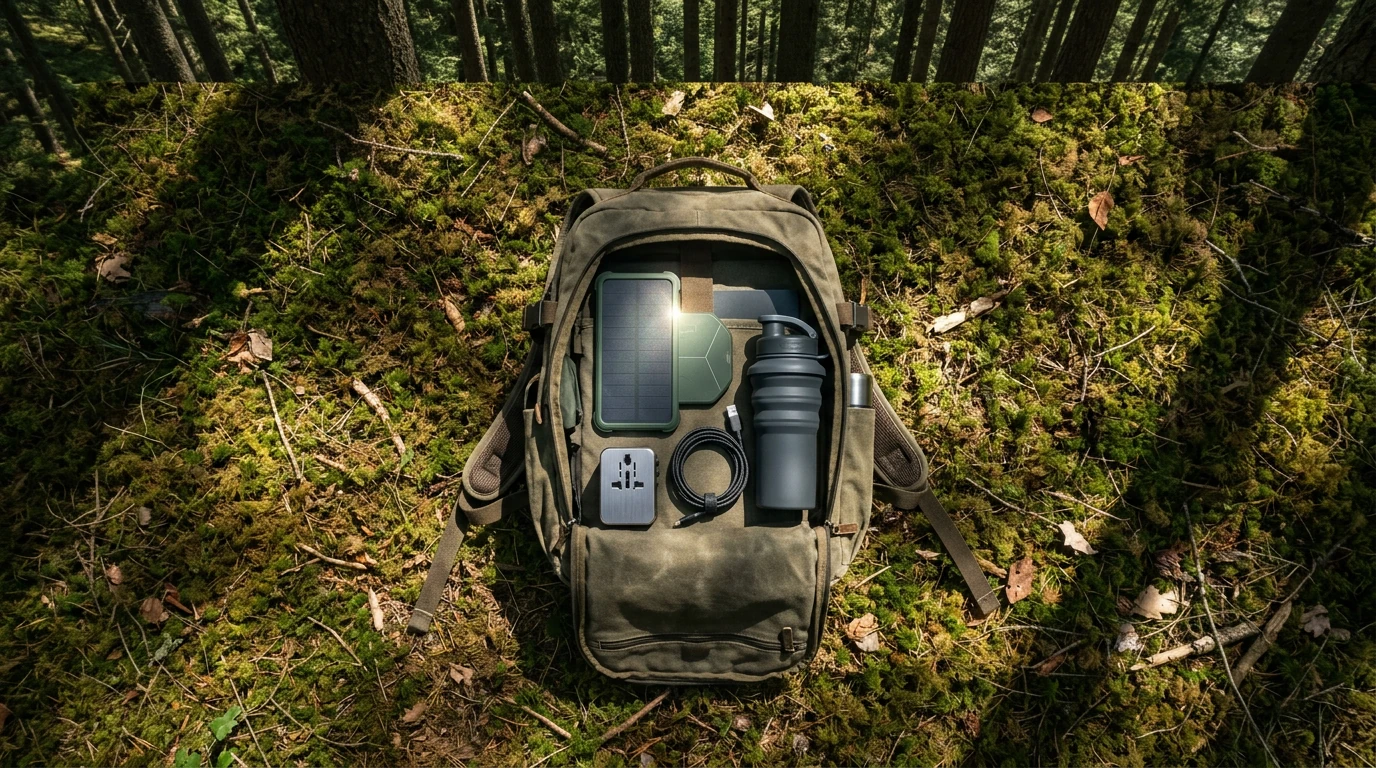
Energy independence is another area seeing major upgrades. Portable solar panel chargers are no longer bulky, inefficient novelties; many current models can charge a smartphone fully in just a few hours of direct sunlight. Packing one is like meal-prepping for your electronics. It requires a little forethought but frees you from hunting for an outlet. Many of the advancements in solar efficiency are shared with other modern devices, like the latest innovations in gardening tools.
Ultimately, adopting zero-waste travel products is less about a complete lifestyle overhaul and more about smart substitutions. From solid shampoo bars that eliminate plastic bottles to bamboo utensils that replace flimsy plastic forks, each small change contributes to a larger positive effect. The real shift is in recognizing that sustainable gear is simply better-designed gear for the modern explorer.
Beyond the Gear: The New Freedom to Explore
Ultimately, the most innovative piece of travel gear isn’t a gadget at all—it’s the newfound freedom these tools provide. Eliminating the anxieties of a lost bag, a dead phone, or a sleepless flight does more than just make a trip smoother; it fundamentally changes your capacity to be present and engaged with your surroundings. When the logistical friction is removed, your mental energy is freed up for curiosity, spontaneity, and connection.
The next frontier of travel isn’t about packing more tech, but about using the right tech to pack less, worry less, and experience more. As our accessories become smarter and more reliable, they fade into the background, becoming silent partners in our adventures. So, the real question is no longer about what gear you should bring, but rather, what will you do with the extra time, energy, and peace of mind you gain from it?
Frequently Asked Questions
What are the most necessary travel accessories for international trips?
For international travel, the core essentials include a high-quality universal travel adapter with USB-C ports, a portable power bank (at least 20,000mAh), and an eSIM or portable Wi-Fi hotspot for connectivity. Beyond tech, compression packing cubes for organization and a portable personal safety alarm are highly recommended for efficiency and peace of mind.
How can smart luggage improve my travel experience?
Smart luggage enhances travel primarily through security and convenience. Features like integrated GPS tracking offer invaluable peace of mind by letting you know where your bag is at all times. Other useful innovations include proximity alerts that prevent theft in crowded areas and remote digital locks you can control from your phone.
Are Made in USA travel accessories more durable or sustainable?
While not a universal rule, many ‘Made in USA’ travel brands emphasize high-quality materials, reliable construction, and ethical manufacturing practices, which often translates to greater durability. They may also offer stronger warranties and repair programs, contributing to a more sustainable, long-term investment compared to disposable, mass-produced alternatives.
What are some innovative ways to stay charged while traveling?
Beyond standard power banks, look for Gallium Nitride (GaN) wall chargers, which are significantly smaller and more powerful. Solar-powered backpacks offer a sustainable way to trickle-charge devices on the go. power banks with ‘pass-through’ charging allow you to charge the bank and your devices simultaneously from a single wall outlet.
How can I ensure my personal safety with travel accessories?
Modern safety accessories offer discreet protection. Consider a personal safety alarm that emits a loud siren to deter attackers, an RFID-blocking wallet to prevent electronic theft, and a portable door lock for extra security in hotels. Anti-theft backpacks with slash-proof fabric and hidden zippers are also effective for securing valuables in crowded places.