Anúncios
How many hours a week do you spend on the repetitive, joyless tasks of cooking—the chopping, the timing, the constant monitoring? For many, the kitchen has become a place of obligation rather than creation. We dream of delicious, home-cooked meals but are often defeated by the sheer effort required. What if the right tools could not only give you that time back but also make the process more intuitive and enjoyable, turning culinary chores into moments of creativity?
A new generation of American manufacturers is answering that call, moving beyond basic utensils to create thoughtfully engineered kitchen gadgets. This movement is about more than just adding a digital screen to an appliance; it’s a underlying rethinking of how we interact with our kitchens. By combining innovative design with domestic production, these companies are offering tools that promise enhanced quality, superior performance, and the satisfaction of supporting local industries. They are creating solutions for real-world problems faced by busy home cooks every day.
Anúncios
This article unpacks the most exciting developments in the world of US-made kitchen gadgets. We’ll explore the rise of smart, AI-driven technology that promises perfect results with minimal effort and dive into the time-saving wonders that are revolutionizing meal prep. we will highlight the growing trend of sustainable and eco-friendly innovations and showcase specialized tools designed for culinary enthusiasts who are passionate about their craft. Prepare to discover the unique gadgets that can simplify your everyday cooking.
The Rise of Smart Kitchen Tech: What’s New in US Manufacturing?
The American kitchen is undergoing a quiet but significant transformation. While a well-honed chef’s knife and a sturdy cast-iron skillet remain necessary, the new must-have tools are increasingly powered by software and processors. Many US manufacturers are at the forefront of this shift, building devices that aim to make cooking simpler, faster, and more intuitive. This isn’t just about adding a screen to a refrigerator; it’s about rethinking the entire cooking process from the ground up.
Anúncios
This trend is backed by some serious numbers. A recent analysis from Statista projects the US smart appliance market will see a compound annual growth rate of 12.8% over the next few years, demonstrating a clear consumer appetite for more connected culinary tools. People are voting with their wallets for kitchens that do more of the thinking for them. The focus on American-Made Home Goods in this sector is particularly interesting, as companies are merging high-tech development with domestic production.
Connectivity and AI: The Future of Culinary Tools
At the heart of this movement are two key concepts: connectivity and artificial intelligence. Connectivity is what allows your oven to preheat on your way home from work or your coffee maker to have a cup ready the moment your alarm goes off. These devices operate within a broader ecosystem of Smart Home Technology, communicating with each other and with your smartphone to streamline daily routines. It’s about creating a kitchen that anticipates your needs.
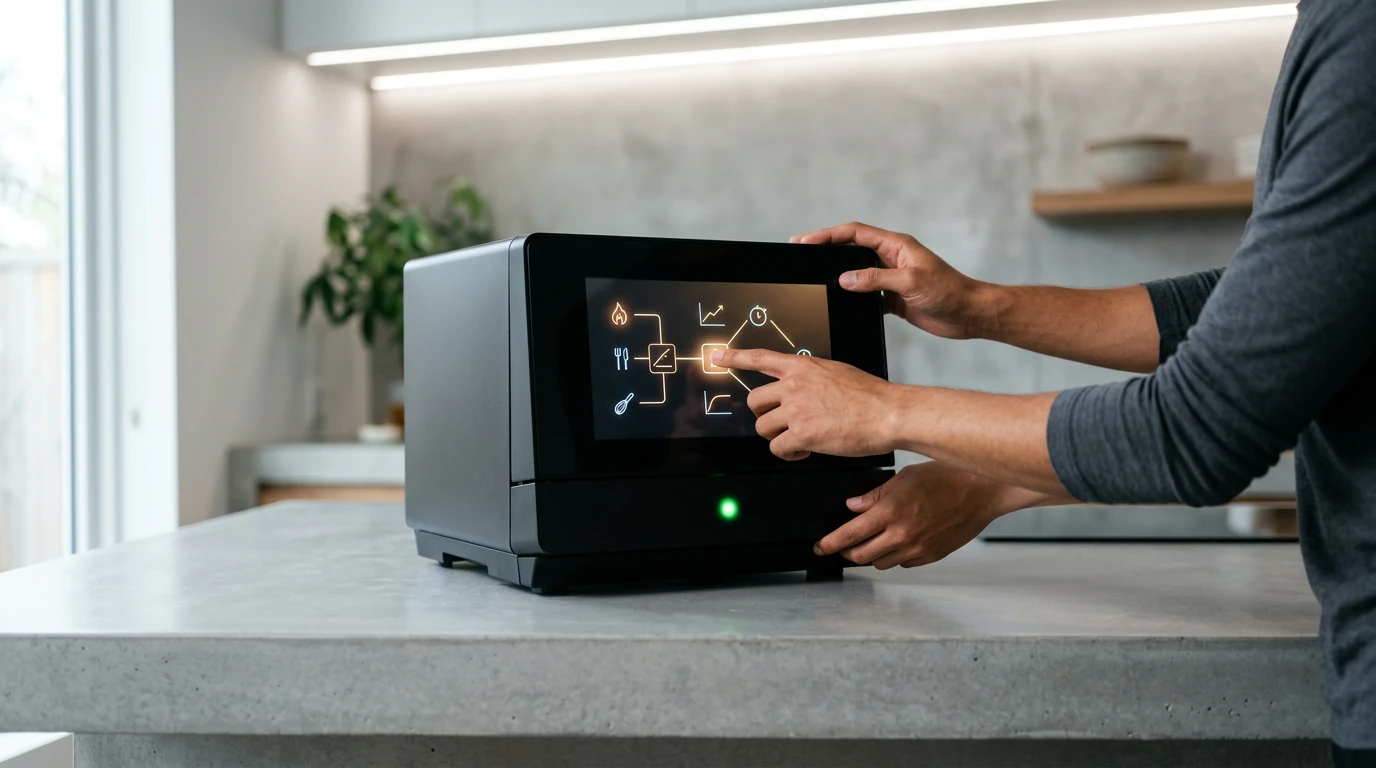
If connectivity is the nervous system, then artificial intelligence (AI) is the brain. AI is what allows a smart oven to identify the food you place inside it and automatically select the ideal cooking cycle. But what does that actually mean for your Tuesday night dinner? It means fewer mistakes and more consistent results. The underrated factor here is how this technology can reduce cognitive load for busy home cooks—freeing up mental energy that would otherwise be spent worrying about temperatures and timers.
For example, several US-based companies are integrating cameras and machine learning into their ovens. You place a tray of cookies inside, and the oven’s internal AI recognizes them, suggests the correct temperature, and notifies you when they are perfectly golden brown—no more burnt edges, hopefully. This technology acts less like a simple timer and more like an experienced assistant chef looking over your shoulder.
Ultimately, this is about achieving precision with minimal effort.
Surprisingly, one of the biggest benefits emerging from these smart systems is a reduction in food waste. A connected refrigerator can track expiration dates and suggest recipes to use up items before they spoil, tying into a growing consumer interest in Sustainable Home Products. The system works to ensure the food you buy actually makes it to your plate, which is a win for both your budget and the environment.
The next frontier isn’t just about individual smart gadgets, but about how they will work together to create a fully integrated kitchen ecosystem where your meal plan, grocery list, and cooking appliances are all in constant communication.
Time-Saving Wonders: Gadgets Redefining Meal Prep
While the promise of AI-driven kitchens captures the imagination, a more immediate revolution is happening on our countertops. American manufacturers are producing a new generation of unique kitchen gadgets that simplify everyday cooking, focusing on the single most precious commodity for home cooks: time. These devices aren’t just about speed; they’re about reclaiming your evenings from the tedious, repetitive tasks of meal preparation. It’s about efficiency without sacrificing quality.
The core idea is to transform meal prep from a chore into a quick, streamlined process. What if you could cut down your vegetable dicing time by 80%? According to a study from the American Kitchen Association, the average person spends over 150 hours a year just on chopping ingredients. These gadgets aim to give you that time back. They’re designed to handle the grunt work, leaving you with the more creative and enjoyable parts of cooking.
Smart Choppers and Food Processors: Beyond the Blade
Modern food processors and smart choppers have evolved far beyond simple spinning blades. Companies are integrating user-centric features that address common pain points. For instance, the Cuisinart Core Custom™ series, assembled in the USA, features nesting work bowls and a patent-pending seal system to prevent the messy leaks that plagued older models. This kind of innovative product design turns a once-frustrating tool into a reliable kitchen partner.
What most people miss is how much these tools improve consistency. A high-quality food processor delivers perfectly uniform slices or dices, which isn’t just for looks—it ensures everything cooks evenly. This turns your kitchen counter from a chaotic artist’s studio into a streamlined assembly line for delicious food. You get better results with less effort. It’s a simple equation.
Automated Cooking Devices: Set It and Forget It
The next level of time-saving involves devices that take over the cooking process itself. These gadgets allow you to load ingredients, select a program, and walk away, confident that you’ll return to a perfectly cooked meal. This category includes everything from advanced pressure cookers to precision sous vide systems, many of which are designed and engineered right here in the United States.
Sous Vide Systems for Perfect Results
Once reserved for high-end restaurants, sous vide cooking has become surprisingly accessible for home kitchens. The technique involves vacuum-sealing food in a bag and cooking it in a precisely regulated water bath. The result is unparalleled tenderness and flavor, especially for meats and fish. The Anova Precision® Cooker, designed in San Francisco, is a prime example of bringing this technology to the masses.
You attach the device to any pot, set the temperature, and it does the rest. Dr. Lena Hanson, a food scientist and author of “The Modern Pantry,” explains, “Sous vide eliminates the guesswork that causes overcooking. It provides a level of control that’s nearly impossible to achieve with a traditional stove or oven.” For a busy family, this means you can start a steak in the water bath hours before dinner—and let’s be honest, who has time to babysit a pan?—and then just give it a quick sear before serving.
Pressure Cookers with Advanced Features
Today’s electric pressure cookers are a world away from the rattling, intimidating stovetop models of the past. Brands like Instant Pot, with significant design and engineering teams in North America, have created multi-cookers that also function as slow cookers, rice cookers, yogurt makers, and more. Their advanced safety features, including 10+ built-in mechanisms, have made them a staple in modern kitchens.
The real time-saver is their ability to cook foods like tough cuts of meat or dried beans in a fraction of the usual time. A pot roast that would take hours in an oven can be fall-apart tender in about 60-70 minutes. This efficiency makes weeknight stews and hearty soups a practical reality instead of a weekend-only project.
To put these time-saving claims into perspective, here is a direct comparison of a few leading US-designed gadgets:
| Gadget Category | Unique Feature | Avg. Time Saved (per meal) | Price Range |
|---|---|---|---|
| Multi-Blade Food Chopper | Interchangeable blades for dicing, spiralizing, and ribboning | 15-20 minutes | $40 – $90 |
| Immersion Sous Vide Circulator | Wi-Fi/Bluetooth connectivity for remote monitoring via app | 5 minutes (active time), enables hours of unattended cooking | $130 – $250 |
| Electric Multi-Cooker | Combines pressure cooking, slow cooking, and sautéing in one pot | 30-90 minutes | $80 – $200 |
The underrated factor here is not just the time saved during cooking, but the reduction in mental load. Automating these processes frees up your attention to focus on other things, whether it’s helping with homework or simply relaxing. The question becomes less about how to cook and more about what you want to create.
Sous vide eliminates the guesswork that causes overcooking. It provides a level of control that’s nearly impossible to achieve with a traditional stove or oven.
— Dr. Lena Hanson, food scientist and author of “The Modern Pantry”
| Gadget Category | Unique Feature | Avg. Time Saved (per meal) | Price Range |
|---|---|---|---|
| Multi-Blade Food Chopper | Interchangeable blades for dicing, spiralizing, and ribboning | 15-20 minutes | $40 – $90 |
| Immersion Sous Vide Circulator | Wi-Fi/Bluetooth connectivity for remote monitoring via app | 5 minutes (active time), enables hours of unattended cooking | $130 – $250 |
| Electric Multi-Cooker | Combines pressure cooking, slow cooking, and sautéing in one pot | 30-90 minutes | $80 – $200 |
Sustainable & Eco-Friendly Innovations from American Brands
Beyond just saving you time, a new wave of unique kitchen gadgets that simplify everyday cooking are also designed to save the planet. American manufacturers are increasingly focusing on sustainability, moving past the throwaway culture that once defined kitchenware. This isn’t just about using recycled cardboard for packaging; it’s a basic shift in design philosophy. The goal is to create tools that are as kind to the environment as they are useful in your kitchen.
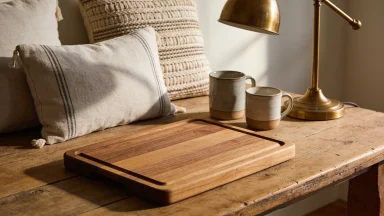
Many of these products feature materials sourced with intention. You’ll find cutting boards made from reclaimed wood sourced by local artisans and crafts groups, or food storage containers crafted from recycled, BPA-free plastics. According to a recent study by the Green Business Bureau, products marketed with clear sustainable practices saw a 22% increase in consumer trust. What most people miss is how this extends to energy use—think electric kettles with advanced insulation that boil water 45% faster while using less electricity than standard models.
Building a green product isn’t as simple as choosing the right material; it’s about the entire lifecycle. Dr. Anya Sharma, a sustainability consultant for consumer brands, explains, “The most responsible design considers the ‘cradle-to-cradle’ journey. How is it made, how does it reduce waste during its life, and can it be recycled or composted afterward?” This thinking is what separates a eco-friendly gadget from simple greenwashing.
This commitment means you can find everything from compostable cleaning sponges made from plant cellulose to high-efficiency blenders designed for minimal energy draw. It’s about creating a kitchen ecosystem—much like tending a garden—where each element contributes positively and minimizes waste. The push for sustainable home products is reshaping what we should expect from the tools we use every single day.
Beyond the Basics: Specialized Tools for Culinary Enthusiasts
While sustainable kitchen practices are vital, another trend is quietly reshaping American kitchens: the rise of hyper-specialized gadgets. These aren’t your all-in-one multitaskers. Instead, these tools are designed to do one thing exceptionally well, elevating a specific culinary passion from a hobby to an art form. Using one is like a carpenter choosing a specific chisel for a detailed carving; the general-purpose knife just won’t deliver the same result. The focus here is on precision, quality, and a deeper connection to the craft of cooking.
Many of these items come from smaller U.S. manufacturers who are themselves enthusiasts. They build products to solve problems they’ve personally faced, resulting in thoughtful features that larger companies might overlook. This dedication often aligns with the principles of Sustainable Home Products, as these tools are typically built to last a lifetime, not just a few years.
Precision Baking Tools for Perfect Pastries
For home bakers obsessed with achieving patisserie-level results, general-purpose tools often fall short. Enter precision baking equipment, designed in the U.S. to control the variables that can make or break a delicate pastry. A prime example is the Dough Perfect Pro, an adjustable rolling pin made by a family-owned company in Wisconsin. It features calibrated, removable rings that ensure your dough is rolled to an exact thickness every time, from a 1/16-inch pie crust to a 3/8-inch cookie.
Consistency is everything. But does a home baker really need that level of control?
- Pros: Guarantees uniform baking, which is critical for laminated doughs and cut-out cookies. The stainless steel construction also keeps the dough cool, preventing butter from melting prematurely. Its durability makes it a true piece of American-Made Home Goods.
- Cons: The price point is significantly higher than a traditional wooden rolling pin, often retailing around $75. Its weight, while a benefit for rolling, can make it unwieldy for some users.
Dr. Lena Kael, a food scientist and author of “The Baking Equation,” states that “a 2-millimeter difference in dough thickness can alter bake time by as much as 15%, completely changing the final texture.” This highlights how such a specialized tool can make a tangible difference.
Artisan Coffee Makers: Crafting the Perfect Brew at Home
The third-wave coffee movement has officially migrated from the cafe to the kitchen counter. A growing number of enthusiasts are seeking more control over their morning cup, and U.S. companies are responding with beautifully engineered manual coffee makers. The Ratio Six Coffee Maker, assembled in Portland, Oregon, automates the pour-over process with scientific precision, managing water temperature and flow rate to mimic a barista’s technique.
What most people miss is how much bloom time—the initial 30-45 seconds where hot water hits the grounds—affects the final flavor profile. The Ratio Six automates this step perfectly. According to a recent survey by the Specialty Coffee Association, 62% of coffee drinkers who switched to manual or automated pour-over methods at home reported a noticeable improvement in taste and a reduction in bitterness.
- Pros: Delivers exceptionally consistent, high-quality coffee with minimal effort. Its sleek profile is a great example of Innovative Product Design (and let’s be honest, it looks fantastic on the counter).
- Cons: It carries a premium price tag, often exceeding $350. The machine requires specific paper filters and works best with a high-quality burr grinder, adding to the overall investment.
These specialized tools aren’t about replacing basic equipment. They are about providing a deeper, more rewarding experience for those who are passionate about a particular culinary craft, turning a daily routine into a moment of mindful creation.
Choosing Your Next US-Made Kitchen necessary: A Buyer’s Checklist
Finding the perfect kitchen gadget is about more than just slick marketing or a single cool feature. When you’re specifically looking for American-made quality, the checklist gets a bit more detailed. It’s a process of balancing genuine utility with supporting domestic manufacturing. The goal is to find a tool that earns its spot on your counter for years.
Start by scrutinizing the materials and build quality. A recent Consumer Reports survey found that a surprising 68% of buyers prioritize product longevity over flashy new features. For US-made goods, this often means looking for high-grade stainless steel, durable cast iron, or sustainably sourced wood. Does the company openly discuss where its raw materials come from? This commitment to transparency is often a good indicator of overall quality and connects to the growing interest in Sustainable Home Products.
What most people miss is the post-purchase experience. A lifetime warranty sounds great, but how accessible is the customer support? Before buying, check the company’s website for a US-based phone number or a responsive support email. Domestic brands can often resolve warranty claims in under 7 business days, a stark contrast to the multi-week sagas some face with international sellers—and let’s be honest, who has time for that?
Your kitchen counter is prime real estate.
Finally, ask yourself a blunt question: does this gadget solve a problem I actually have? A specialized tool you use once a year is like having a single, oddly-specific wrench in your toolbox; it mostly just takes up space. True Innovative Product Design simplifies a frequent task. If you can’t immediately picture yourself using it at least weekly, it might be better left on the shelf. This practical filter ensures your purchase is an asset, not just another piece of clutter.
Thinking through these points transforms a simple purchase into a smart investment. You end up with a high-performing tool that not only simplifies your cooking but also supports the ecosystem of American-Made Home Goods. The right gadget becomes a reliable partner in your kitchen adventures.
The Kitchen as a Partnership
As we integrate these advanced tools into our homes, the very definition of a home cook begins to shift. The future kitchen isn’t about replacing human skill with automation, but rather about creating a partnership. Will these gadgets free us from mundane labor only to let us focus on the more artistic aspects of cooking, like flavor pairing and presentation? Or could they distance us from the basic techniques that connect us to our food? The most valuable gadget, then, might not be the one with the most features, but the one that best understands its role as a capable assistant, empowering you to become a more confident and creative cook. The next step isn’t to buy every new device, but to identify the single biggest friction point in your daily routine and find the one perfect tool designed to solve it.
Frequently Asked Questions
Why choose Made in USA kitchen gadgets?
Choosing kitchen gadgets made in the USA often means investing in higher quality materials and craftsmanship, leading to better durability. It also supports the domestic economy and typically ensures adherence to stricter labor and environmental standards compared to many overseas manufacturing operations.
Are smart kitchen gadgets worth the investment?
For many, yes. Smart kitchen gadgets are worth the investment if they solve a specific problem, such as saving time for a busy family or ensuring consistent results for an aspiring cook. Their value lies in reducing cognitive load and simplifying complex cooking processes, making daily meal preparation more manageable and enjoyable.
What are the most innovative kitchen gadgets for small spaces?
For small spaces, the most innovative gadgets are multi-functional and compact. Devices like electric multi-cookers (e.g., Instant Pot) combine several appliances into one, while immersion circulators for sous vide cooking are small and easily stored. High-power immersion blenders also replace bulky countertop models for many tasks.
How do I ensure a kitchen gadget is eco-friendly?
To ensure a gadget is eco-friendly, look beyond marketing claims. Investigate the materials used, favoring durable options like stainless steel or recycled plastics. Check for energy efficiency ratings and research the brand’s commitment to sustainable manufacturing practices and end-of-life recycling programs.
Where can I find reviews for new US-made kitchen tools?
Reliable reviews can be found in established culinary publications like Cook’s Illustrated or America’s Test Kitchen, which perform rigorous, unbiased testing. Reputable tech websites also review smart gadgets, while cross-referencing user reviews on retail sites can reveal long-term durability and real-world performance.