
Anúncios
Gardening has always been a conversation between a person and the earth, a hands-on pursuit defined by soil under the fingernails and the satisfaction of watching something grow. But what if you could understand the soil’s whispers with perfect clarity? The latest wave of innovation isn’t about replacing the gardener; it’s about equipping them with a new suite of senses, transforming guesswork into informed action and physical strain into comfortable efficiency.
This evolution goes far beyond simple gadgets. It represents a underlying shift in how we approach our green spaces, driven by technological advancements, a deeper understanding of human ergonomics, and a growing commitment to sustainability. From sensors that deliver real-time soil health data to your phone, to trowels designed to eliminate wrist pain, the tools of today are smarter, safer, and more conscious of their environmental impact. This new generation of equipment addresses the needs of every kind of enthusiast, whether they cultivate acres of land or a few pots on a city balcony.
Anúncios
In this guide, we’ll dig into the most significant advancements shaping the modern garden shed. We will explore the rise of smart technology that automates watering and decodes soil chemistry, examine the ergonomic revolution making gardening more accessible for all ages, and highlight the sustainable materials changing tool manufacturing. Finally, we’ll look at the specialized gear designed for the unique challenges of container and vertical gardening, ensuring you have the right tool for any job, no matter the size of your plot.
The Dawn of Smart Gardening: Tech in Your Backyard
Gardening has long been a hands-on, dirt-under-the-fingernails pursuit. That’s not changing. What is changing, is the intelligence we can bring to the process. The rise of smart gardening tools infuses traditional practices with data and automation, giving backyard enthusiasts an historic level of control and insight into their green spaces. Think of it less as replacing the gardener and more as giving them a new set of high-tech senses.
Anúncios
Automating Your Green Oasis: Watering & Monitoring
One of the most significant advances in gardening tech is the automated watering system. These devices go far beyond simple timers. Modern systems, like the recently launched Aqua-Minder Pro, connect to local weather forecasts via Wi-Fi to skip watering on rainy days, conserving a significant resource. According to the Environmental Protection Agency, households using smart irrigation controllers can reduce their outdoor water use by as much as 30%. This saves time and money.
These systems often pair with companion apps on your phone, allowing you to control sprinklers or drip lines from anywhere. This level of remote control is becoming common in our homes, similar to the latest US-made kitchen gadgets that simplify meal prep. The real benefit is precision—delivering the right amount of water exactly when your plants need it (and no more accidentally drowning your succulents).
Data-Driven Decisions: Soil Health at Your Fingertips
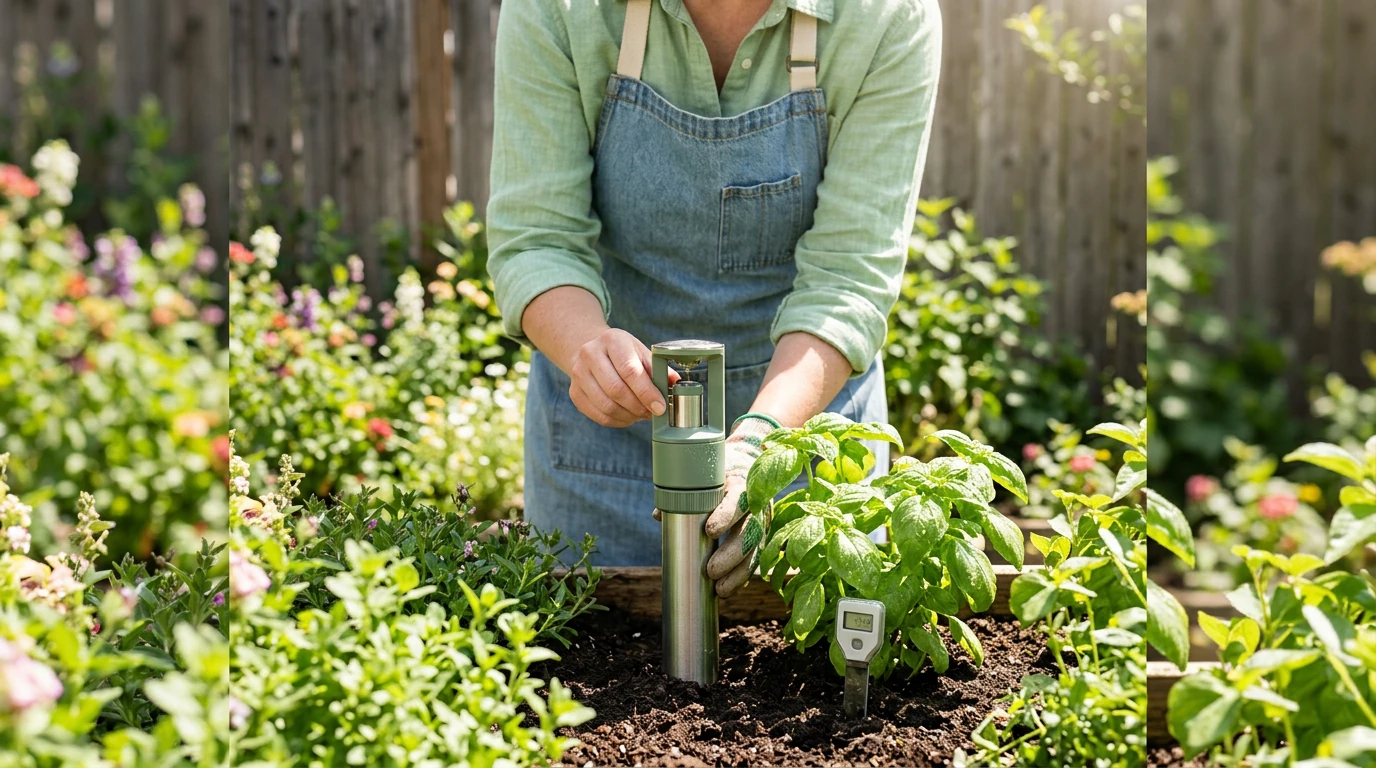
Knowing your soil is the foundation of successful gardening. In the past, this meant guesswork or sending samples to a lab. Now, smart soil sensors provide real-time data directly to your smartphone. These small probes measure key metrics like moisture levels, pH balance, nutrient content, and light exposure. It’s like a fitness tracker for your garden beds.
But what does all this data actually tell you? A sensor might alert you that your tomato patch is low on nitrogen or that the soil is too acidic for your blueberries. This information allows you to amend the soil with precision instead of just guessing. As Dr. Eleanor Vance, a botanist at the Chicago Botanic Garden, states, “Data-driven gardening removes the ambiguity, allowing for targeted care that leads to healthier plants and better yields.” This is especially useful for gardeners working with limited areas, where optimizing every square foot with ingenious space-saving solutions is key.
The underrated factor here is how this technology empowers new gardeners, reducing the steep learning curve and preventing common mistakes that can lead to discouragement. Instead of relying on intuition alone, you have a digital co-pilot helping you understand what your plants are trying to tell you.
Ergonomics Evolved: Tools Designed for Comfort and Efficiency
While smart sensors and apps bring gardening into the digital age, a quieter revolution is happening in the design of the tools themselves. The focus has shifted to ergonomic gardening tools, designed to work with the human body, not against it. This isn’t just about comfort; it’s about extending the years you can happily spend in your garden. The data suggests this matters. According to the American Horticultural Therapy Association, over 68% of gardeners report experiencing muscle soreness or joint pain after a day of work.
The underrated factor here is how much more you can accomplish with tools that fit you properly. Using a poorly designed trowel is like trying to write with a pen that’s too thick or too thin—you can do it, but the effort is distracting and eventually painful. These new designs prioritize efficiency, allowing you to weed, plant, and prune with less wasted motion and physical strain.
Redefining Hand Tools: Less Strain, More Gain
The most significant changes are seen in basic hand tools like trowels, cultivators, and pruning shears. Manufacturers are moving away from traditional straight-handled designs and embracing curved grips that maintain a natural wrist position. Many now feature gel-padded or soft-touch surfaces that absorb pressure and prevent blisters. Materials have also improved, with many tools now made from lightweight aluminum or carbon fiber composites instead of heavy steel.
This makes them surprisingly strong yet easy to handle. Dr. Eleanor Vance, an occupational therapist specializing in repetitive strain injuries at Duke University, explains that a slight 10 to 15-degree bend in a trowel’s handle can reduce wrist strain by up to 30%. For anyone with arthritis or carpal tunnel, are these changes not necessary? These clever designs often feature multiple functions, which is a great lesson in efficiency, much like the ingenious solutions available for small-space living.
Power Tools Perfected: Lighter and Easier to Handle
The evolution of ergonomics isn’t limited to hand tools. Power equipment like string trimmers, leaf blowers, and hedge clippers have become significantly lighter and better balanced. Designers are now paying close attention to the center of gravity, ensuring the tool doesn’t feel front-heavy or awkward during use. This reduces the strain on your back, shoulders, and arms, allowing for longer periods of work without fatigue.
Many models now incorporate advanced shock absorption systems and anti-vibration handles. This is especially important for tools with gasoline or powerful electric motors. The same principles that lead to perfectly balanced, easy-to-use kitchen gadgets are now being applied to our outdoor equipment, making yard work feel less like a chore.
Battery Innovations for Cordless Freedom
A huge part of this shift comes from battery technology. Modern lithium-ion batteries are smaller, lighter, and more powerful than their predecessors. This has allowed manufacturers to create cordless electric tools that rival the performance of gas-powered models without the weight, fumes, or vibration. A typical cordless string trimmer today is about 27% lighter than a comparable gas model from a decade ago, a significant reduction that makes a real difference over an afternoon of work.
Comparison: Ergonomic vs. Traditional Tools
Seeing the differences side-by-side makes the benefits clear. The focus on joint-friendly tools leads to tangible improvements in both comfort and performance.
| Tool | Traditional Design | Ergonomic Design |
|---|---|---|
| Pruning Shears | Hard plastic or metal handles; straight alignment; basic spring mechanism. | Padded, rotating handle to reduce wrist twisting; angled cutting head; shock-absorbing bumper; lightweight forged aluminum body. |
| Garden Trowel | Wooden or plastic straight handle; heavy stainless steel blade welded to the tang. | Curved, soft-grip handle for neutral wrist position; lightweight, one-piece cast aluminum or carbon steel construction; sharpened edges for easier soil penetration. |
| Weeder | Short handle requiring kneeling or bending; simple forked-tip design. | Long handle for upright use; foot pedal for leverage; corkscrew or multi-prong head that removes the entire root system with a simple twist. |
Ultimately, investing in ergonomic tools is an investment in your own physical well-being, ensuring that gardening remains a source of joy and not a source of pain for years to come.
Data-driven gardening removes the ambiguity, allowing for targeted care that leads to healthier plants and better yields.
— Dr. Eleanor Vance, Botanist, Chicago Botanic Garden
Ergonomic vs. Traditional Tool Design at a Glance
| Tool | Traditional Design | Ergonomic Design |
|---|---|---|
| Pruning Shears | Hard plastic or metal handles; straight alignment; basic spring mechanism. | Padded, rotating handle to reduce wrist twisting; angled cutting head; shock-absorbing bumper; lightweight forged aluminum body. |
| Garden Trowel | Wooden or plastic straight handle; heavy stainless steel blade welded to the tang. | Curved, soft-grip handle for neutral wrist position; lightweight, one-piece cast aluminum or carbon steel construction; sharpened edges for easier soil penetration. |
| Weeder | Short handle requiring kneeling or bending; simple forked-tip design. | Long handle for upright use; foot pedal for leverage; corkscrew or multi-prong head that removes the entire root system with a simple twist. |
Sustainable Solutions: Eco-Friendly Tools for a Greener Garden
The movement toward sustainability has firmly taken root in our backyards, with a new generation of eco-friendly gardening tools changing how we cultivate. Manufacturers are increasingly using recycled materials, like ocean-bound plastics for handles and reclaimed FSC-certified wood for shafts. This shift mirrors a broader trend toward quality over disposability, much like the focus on durable US-made kitchen gadgets that are built to last. It’s a simple change with a big impact.
Choosing these tools goes beyond just feeling good about a purchase. According to data from the Environmental Protection Agency, manufacturing with recycled aluminum uses 95% less energy than creating it from raw materials. When you consider how many trowels, forks, and shovels are produced annually, can we afford not to make a more conscious choice? The underrated factor is that these tools often perform just as well, if not better, than their conventional counterparts.
Investing in longevity means less waste in landfills—and less money spent replacing flimsy tools season after season.
Ultimately, creating a sustainable garden is about smart, long-term thinking. A well-made tool made from recycled steel isn’t just an environmental choice; it’s a practical one. This mindset of investing in durable, efficient items is similar to finding ingenious solutions for small living spaces where every item must justify its existence. By choosing tools designed for durability, gardeners are voting with their wallets for a healthier planet and a more resilient garden.
The Rise of Specialized Tools: Niche Solutions for Every Gardener
The classic image of a gardener involves a sprawling yard and a shed full of large tools. But what happens when your garden is a collection of pots on a third-story balcony? The gardening industry is finally catching up, with a boom in specialized gardening tools designed for non-traditional spaces. This isn’t about reinventing the shovel; it’s about refining it for a specific purpose.
Using a standard-sized trowel for a tiny succulent pot is like trying to frost a cupcake with a butcher knife. It’s clumsy and inefficient. A recent study from the National Gardening Association confirms this trend, showing that household participation in container gardening has increased by 18% in just a few years. People with limited space are still eager to grow, and they need equipment that fits their world.
Equipping Your Vertical Garden: Space-Saving Innovations
Vertical gardening is one of the most effective ways to maximize a small footprint, turning a blank wall into a living tapestry of herbs, flowers, or even vegetables. This upward-bound approach, presents unique challenges that generic tools can’t solve. The underrated factor here is how much the right vertical gardening equipment can reduce frustration and improve plant health.
Thinking vertically isn’t just for plants; many of these tools embody the same principles as other clever space-saving home products. They are often modular, collapsible, or designed for multiple uses. Your required checklist should include a few key items.
- Long-Reach Watering Wand: A slim, angled wand allows you to water plants at the top of your structure without a stepladder or soaking the ones below.
- Needle-Nose Pruners: These are perfect for making precise cuts in dense foliage without damaging neighboring plants.
- Modular Wall Planters: Look for systems that allow you to easily add, remove, or rearrange individual pods as your plants grow or your tastes change.
Container Gardening Essentials: Precision and Portability
Gardening in pots demands a different kind of finesse. The limited soil volume means watering and feeding must be more precise. The tools for this job prioritize accuracy and convenience over brute force, much like the difference between a cast-iron skillet and the specialty kitchen gadgets that perform one task perfectly.
Portability is everything. Many urban gardening tools are designed to be lightweight and compact, often fitting into a small tote bag for easy storage (and let’s be honest, who has extra storage space?).
- Soil Scoops: Shaped more like a funnel than a spade, these make it easy to add soil to pots without spilling it all over your patio.
- Portable Tool Caddy: A small, durable bag or bucket organizer keeps your hand trowel, pruners, and fertilizer right where you need them.
- Drip Irrigation Spikes: These simple devices, often made from terracotta or recycled plastic, provide a slow, steady supply of water directly to the roots, preventing the common problem of overwatering.
As more people embrace gardening in smaller, unconventional spaces, the market for these niche tools will undoubtedly continue to expand, offering even more tailored solutions.
Future-Proof Your Garden: What’s Next in Tool Innovation?
While smart sprinklers and battery-powered tools have made gardening easier, the next wave of innovation looks less like an upgrade and more like science fiction. We’re moving beyond simple convenience toward systems that actively partner with you in managing your garden. The focus is shifting from tools that you operate to tools that operate themselves, gathering data and making decisions. This is a big leap.
These emerging technologies promise to save time, reduce resource waste, and make successful gardening accessible to more people. What most people miss is that this isn’t about replacing the gardener; it’s about providing a hyper-intelligent assistant. The goal is to handle the tedious work, allowing you to focus on design and enjoyment.
Robotics and Automation: The Gardener’s New Helper
The concept of a gardening robot is finally moving out of the lab and into the realm of possibility for backyard enthusiasts. Think of it like a Roomba for your garden bed—a small, autonomous unit designed to patrol your plots. These devices are being developed to handle the most repetitive and physically demanding gardening chores. They are much more than just automated lawnmowers.
Early prototypes and small-scale commercial models can already perform soil analysis, deliver water directly to a plant’s roots, and identify common pests using machine vision. A report from the University of Illinois’s agricultural engineering department suggests that such automated systems can reduce water usage by up to 60% compared to traditional sprinkler systems. For those with limited mobility or packed schedules, this could be a genuine major shift.
Autonomous Weeding and Planting Systems
Digging deeper into automation, the most promising development is in precision weeding. Instead of pulling weeds by hand or spraying wide areas with herbicides, new robots use high-resolution cameras to differentiate between a carrot seedling and a thistle. Once a weed is identified, the robot can dispatch it with a tiny jet of eco-friendly herbicide, a concentrated burst of light, or a small mechanical tool. This is gardening on a granular level.
These systems bring a level of efficiency once reserved for large-scale agriculture to the home garden. Imagine having perfectly weeded vegetable beds all season without ever bending over. This kind of automation also pairs beautifully with the trend toward smaller, more intensive gardening, offering efficient solutions for compact living and maximizing yields in tight urban spaces.
Augmented Reality for Garden Design and Planning
One of the biggest hurdles for new gardeners is visualization. How big will that oak tree get in ten years? Will those sunflowers block the light for the tomato plants behind them? Augmented Reality (AR) apps are poised to solve this problem entirely. Using your smartphone or tablet, you’ll be able to overlay 3D models of mature plants onto a live view of your yard.
This technology allows you to experiment with layouts, color combinations, and spacing without digging a single hole. You can see how shadows will fall at different times of day and ensure plants have the room they need to thrive. Some versions even connect to databases that recommend native plants based on your specific location and soil type—a personalized design experience.
Bio-Integrated Tools: Working with Nature’s Design
Perhaps the most forward-thinking trend is the development of bio-integrated tools. This involves creating tools from materials that are not just biodegradable but actively beneficial to the soil as they break down. For example, plant markers or seedling pots made from compressed mycelium (the root structure of fungi) can release valuable nutrients into the soil as they decompose.
Dr. Anya Sharma, a materials scientist at Caltech, explains, “We’re learning to create tools that function as part of the garden’s ecosystem, not just as external implements.” This philosophy extends to sensors designed to mimic plant roots, which can report moisture and nutrient levels with incredible accuracy. The material science behind these ideas is advancing rapidly, much like how new US-made kitchen gadgets are incorporating advanced, sustainable materials. These aren’t just tools; they are temporary participants in your garden’s life cycle, leaving the soil better than they found it.
Choosing Your Arsenal: Tips for Backyard Enthusiasts
While AI-powered gardeners and self-guiding lawnmowers are exciting, bringing innovation into your backyard requires a practical approach. Before investing in the latest high-tech gear, take a hard look at your actual needs, space, and budget. The goal is to find tools that solve a real problem for you, not just to own the newest gadget on the block—a lesson many learn the hard way after a big-ticket purchase.
Investing in innovative gardening tools presents a clear trade-off. On one hand, smart sprinklers and soil sensors can optimize water usage and provide valuable data, potentially leading to healthier plants. But does your 10×10 foot vegetable patch need a soil sensor that syncs to the cloud? According to a report from the University of Georgia Extension, over 40% of gardeners who purchase expensive, single-use tools use them less than five times. The downside is often a higher cost, a steeper learning curve, and another device that could become obsolete.
Think of it like stocking your kitchen; you don’t buy a commercial-grade mixer just to make weekend pancakes. The same logic applies here, where the best tool is often a simple, well-made classic rather than the most complex innovative kitchen gadgets. For urban gardeners, finding clever solutions for small spaces that are multi-functional is far more valuable than a single, high-tech item.
The underrated factor here is repairability and maintenance.
A quality hand trowel might last a lifetime with simple cleaning, while a battery-powered auger introduces charging, motor care, and potential electronic failure. Always read long-term reviews to understand the true cost of ownership. The wisest strategy often involves building a hybrid toolkit: durable, classic implements for core tasks, supplemented by a few select tech tools that provide a genuine, measurable benefit to your specific garden.
The Future in Your Hands
As technology and thoughtful design continue to reshape our tools, the very nature of our relationship with the garden is up for debate. Will the rise of autonomous weeding robots and data-driven planting schedules distance us from the hands-on connection that drew us to gardening in the first place? Or, by handling the tedious and the strenuous, will these innovations free us to focus on the more creative aspects—the design, the beauty, and the simple joy of being in a thriving green space? The next frontier isn’t just about building a better tool, but about defining how much of the conversation with our gardens we’re willing to let them handle on their own.
Frequently Asked Questions
Are smart gardening tools worth the investment for a small backyard?
Yes, they can be incredibly valuable. For small spaces, smart tools help you optimize every square foot by providing precise data on soil health and watering needs. This prevents waste and ensures your plants get exactly what they require to thrive, maximizing your yield and enjoyment.
What are the most primary ergonomic features to look for in gardening tools?
Prioritize tools with curved or pistol-grip handles that keep your wrist in a neutral position. Also, look for padded, non-slip surfaces and lightweight materials like aluminum or carbon fiber. For power tools, good balance and anti-vibration technology are key to reducing fatigue and strain.
How can I ensure my gardening tools are eco-friendly?
Look for tools made from recycled or reclaimed materials, such as recycled plastic handles or reclaimed steel blades. Check for wood components that are FSC-certified, which guarantees responsible forest management. Investing in durable, well-made tools that won’t need frequent replacement is another key aspect of sustainable gardening.
Can specialized gardening tools really make a difference for beginners?
Absolutely. Specialized tools are designed to make specific tasks much easier, which can significantly reduce the learning curve for new gardeners. For example, a long-handled weeder eliminates the need for bending and kneeling, while a soil scoop for containers prevents messy spills, helping beginners achieve success and build confidence.
What’s the best way to maintain my innovative gardening tools?
Regular maintenance is key. Clean dirt and sap off tools after every use to prevent rust and buildup. Keep blades sharp for clean cuts and efficient work. For smart devices, ensure sensors are clean for accurate readings and store all tools in a dry, protected area to prolong their lifespan.