Navigating Made in USA Regulations: 2026 Compliance Updates
Navigating the complex landscape of Made in USA Compliance updates for 2026 requires businesses to understand evolving regulations, ensure accurate product labeling, and meticulously verify supply chain origins to avoid significant penalties and maintain consumer trust.
As 2026 approaches, businesses operating within the United States face an increasingly scrutinized environment regarding product origin claims. Understanding and adhering to the latest updates in Made in USA Compliance is not merely an option but a critical necessity for maintaining consumer trust, avoiding hefty penalties, and ensuring market access. This guide will walk you through the essential changes and best practices to navigate these evolving regulations confidently.
Understanding the Foundation of Made in USA Claims
The concept of ‘Made in USA’ is deeply ingrained in American consumer expectations, often implying quality, ethical production, and support for domestic jobs. However, the legal definition and criteria for making such claims are rigorously enforced, primarily by the Federal Trade Commission (FTC). Businesses must grasp these foundational principles before delving into future updates.
The FTC’s enforcement policy generally requires that for a product to be advertised as ‘Made in USA,’ ‘Made in America,’ or any similar unqualified claim, all or virtually all of the product must be made in the United States. This includes not only the manufacturing process but also the sourcing of components and materials. This strict interpretation means that even minor foreign content can disqualify a product from making an unqualified claim.
The ‘All or Virtually All’ Standard Explained
The ‘all or virtually all’ standard is the cornerstone of the FTC’s Made in USA policy. It means that all significant parts and processing that go into the product must be of U.S. origin. This isn’t just about assembly; it extends to raw materials, subcomponents, and labor. The FTC considers factors such as the proportion of U.S. content, the cost of foreign content, and the nature of the manufacturing processes involved.
- Significant Parts: These are components that form a substantial part of the product’s value or function.
- Processing: This refers to the various stages of manufacturing, from raw material conversion to final assembly.
- Cost of Foreign Content: Even if a small component is imported, its cost relative to the total manufacturing cost can influence the claim’s validity.
- Final Assembly: While assembly in the U.S. is important, it alone is not sufficient if the majority of components are foreign.
Understanding this stringent standard is the first step toward compliance. Businesses cannot make assumptions or rely on vague interpretations; instead, they must conduct thorough due diligence to ensure every aspect of their product’s creation aligns with the FTC’s guidelines. Failure to do so can lead to significant legal and reputational damage.
Key Regulatory Updates and Enforcement Trends for 2026
The regulatory landscape surrounding ‘Made in USA’ claims is dynamic, with ongoing efforts to strengthen consumer protection and clarify compliance requirements. As we look towards 2026, several key updates and enforcement trends are emerging that businesses need to monitor closely. These changes are designed to address loopholes, increase transparency, and ensure fair competition.
One significant trend is the increased scrutiny of marketing claims across various platforms, including e-commerce sites, social media, and traditional advertising. The FTC is leveraging advanced data analytics and consumer complaints to identify and investigate potentially deceptive claims more efficiently. This means businesses can expect a higher likelihood of enforcement action if their claims are not fully substantiated.
Enhanced Scrutiny of Qualified Claims
While unqualified ‘Made in USA’ claims are subject to the ‘all or virtually all’ standard, businesses can also make qualified claims, such as ‘Made in USA with imported parts’ or ‘70% U.S. content.’ However, even these qualified claims are facing enhanced scrutiny. The FTC requires that such claims be truthful and clearly communicate the extent of U.S. content and foreign components.
- Clarity: Qualified claims must be unambiguous and easily understood by the average consumer.
- Substantiation: Businesses must have reliable evidence to support any percentage or descriptive claim about U.S. content.
- Prominence: Disclosures about foreign content should be prominent and not buried in fine print.
The emphasis is on preventing any form of consumer deception, even if a claim is not entirely unqualified. Businesses should review their qualified claims to ensure they are precise, verifiable, and presented in a way that leaves no room for misinterpretation.
Impact of Supply Chain Changes on Compliance
The global supply chain has experienced unprecedented disruptions in recent years, leading many businesses to re-evaluate their sourcing strategies. These shifts have a direct and profound impact on Made in USA Compliance. Sourcing components from new suppliers, even domestic ones, requires renewed diligence to ensure that the origin of all materials and processing steps still meets the FTC’s criteria.
Businesses increasingly face challenges in tracing the origin of raw materials and subcomponents, especially in complex products with multiple layers of suppliers. The push for greater supply chain transparency, driven by both regulatory bodies and consumer demand, means companies must implement robust tracking and verification systems.
Strategies for Supply Chain Verification
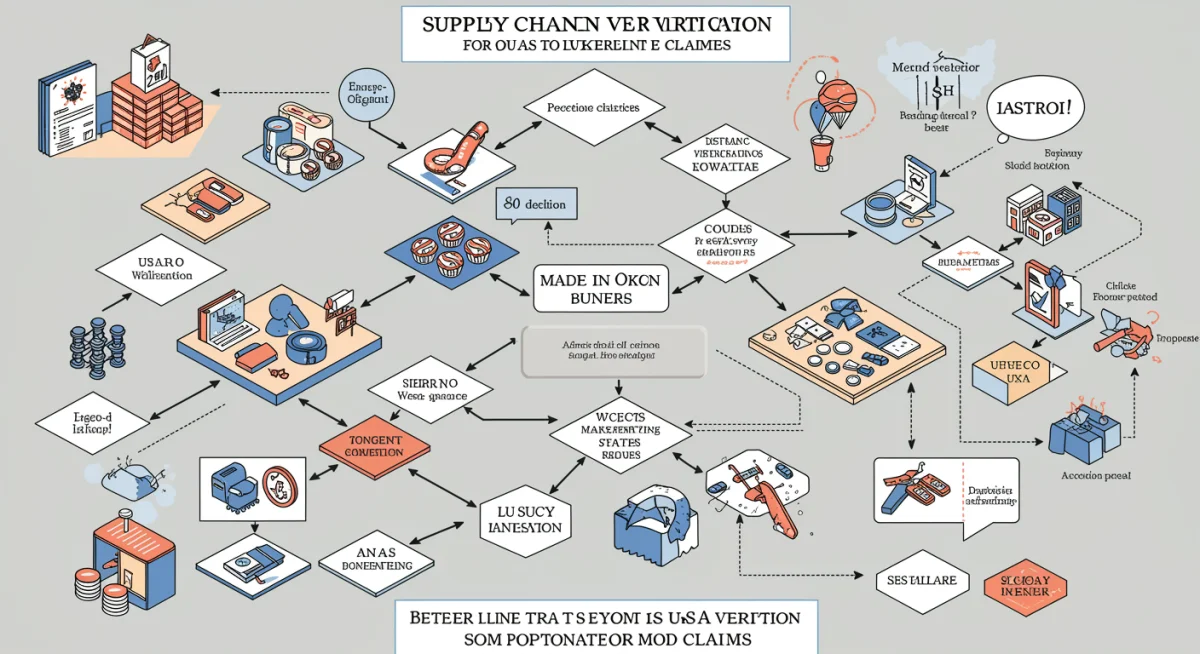
To confidently make ‘Made in USA’ claims, businesses need comprehensive strategies for verifying their supply chains. This involves more than just asking suppliers for assurances; it requires proactive investigation and documentation.
- Supplier Audits: Regularly audit suppliers to verify the origin of their materials and manufacturing processes.
- Contractual Agreements: Include specific clauses in supplier contracts that guarantee the origin of components and materials.
- Documentation: Maintain detailed records of all sourcing, manufacturing, and assembly steps, including certificates of origin for all components.
- Internal Tracking Systems: Implement robust internal systems to track the journey of every component from its origin to the final product.
These strategies help build a solid foundation of evidence, which is crucial for defending any ‘Made in USA’ claim if challenged. Proactive verification mitigates risks and ensures that businesses are not inadvertently making false claims due to a lack of supply chain visibility.
Best Practices for Accurate Labeling and Marketing
Accurate labeling and marketing are paramount when making ‘Made in USA’ claims. Beyond simply meeting the regulatory standards, effective communication builds consumer trust and enhances brand reputation. Misleading labels or marketing messages can quickly erode consumer confidence and lead to significant legal repercussions.
The FTC emphasizes that all claims, whether explicit or implied, must be truthful and non-deceptive. This extends to product packaging, advertising copy, website content, and social media posts. Businesses need to adopt a holistic approach to ensure consistency and accuracy across all consumer touchpoints.
Crafting Compliant Marketing Messages
When crafting marketing messages, businesses should always err on the side of caution and clarity. Avoid ambiguous language, and if there’s any doubt about whether a product meets the ‘all or virtually all’ standard, opt for a qualified claim.
- Review All Claims: Periodically review all marketing materials, including digital and print, to ensure compliance with current regulations.
- Educate Marketing Teams: Ensure that marketing and sales teams are fully aware of the FTC’s Made in USA standards.
- Seek Legal Counsel: For complex products or ambiguous situations, consult with legal experts specializing in advertising law.
- Transparency: Be transparent about any foreign components if making a qualified claim, clearly stating what parts are imported.
By implementing these best practices, businesses can confidently communicate their ‘Made in USA’ claims while minimizing the risk of regulatory enforcement or consumer backlash. Transparency and accuracy are the cornerstones of effective and compliant marketing.
The Role of Documentation and Record-Keeping
Robust documentation and meticulous record-keeping are indispensable for any business making ‘Made in USA’ claims. In the event of an FTC inquiry or consumer challenge, the ability to provide clear, verifiable evidence of compliance is critical. Without proper documentation, even a genuinely compliant product can be deemed non-compliant due to a lack of substantiation.
This goes beyond simply storing invoices. It involves creating a comprehensive system for tracking the origin of every component, the location of every manufacturing step, and the costs associated with both domestic and foreign content. This level of detail ensures that businesses can readily demonstrate adherence to the ‘all or virtually all’ standard or the specifics of any qualified claim.
Essential Records for Compliance
To establish a strong defense for ‘Made in USA’ claims, businesses should maintain a specific set of records. These records form the backbone of their compliance efforts.
- Bills of Lading and Shipping Documents: For all incoming materials and components, indicating origin.
- Supplier Declarations: Formal statements from suppliers confirming the origin of their products.
- Manufacturing Records: Detailed logs of production processes, including dates, locations, and personnel involved.
- Cost Analyses: Documentation showing the relative cost of U.S. versus foreign content.
- Marketing Material Archives: Copies of all advertisements and labels used, along with their publication dates.
Implementing a systematic approach to record-keeping not only aids in compliance but also provides valuable insights into supply chain efficiency and cost management. It transforms a regulatory burden into an operational advantage, reinforcing trustworthiness and accountability.
Preparing for 2026: A Proactive Approach
The upcoming year, 2026, represents a critical juncture for businesses to re-evaluate and strengthen their Made in USA Compliance strategies. A proactive approach is far more effective and less costly than a reactive one, especially given the FTC’s heightened enforcement focus. Businesses should begin their preparations now, rather than waiting for new regulations to take full effect.
This preparation involves a multi-faceted strategy that encompasses legal review, operational adjustments, and continuous monitoring. It’s an ongoing commitment, not a one-time task, reflecting the evolving nature of both consumer expectations and regulatory interpretations.
Steps for Proactive Compliance
To ensure readiness for 2026, businesses should undertake several key actions. These steps will help mitigate risks and build a robust compliance framework.
- Internal Audit: Conduct a thorough internal audit of all products currently bearing ‘Made in USA’ claims to verify compliance.
- Review Supplier Contracts: Update contracts with suppliers to include explicit clauses regarding material origin and compliance.
- Employee Training: Provide comprehensive training to all relevant departments, including purchasing, manufacturing, marketing, and legal, on current and anticipated regulations.
- Technology Adoption: Invest in technology solutions for supply chain traceability and documentation management.
- Stay Informed: Regularly monitor FTC announcements, legislative changes, and industry best practices.
By taking these proactive steps, businesses can navigate the complexities of Made in USA regulations with confidence, ensuring their claims are truthful, their operations are compliant, and their brand integrity remains intact. The investment in proactive compliance today will yield significant benefits tomorrow, safeguarding against potential penalties and bolstering consumer confidence.
The Importance of Continuous Monitoring and Adaptation
In the ever-changing landscape of global trade and consumer expectations, continuous monitoring and adaptation are essential for maintaining Made in USA Compliance. Regulatory policies are not static; they evolve in response to new economic realities, technological advancements, and shifts in consumer sentiment. Businesses that treat compliance as a one-time check rather than an ongoing process risk falling behind and facing future penalties.
This continuous vigilance extends to staying abreast of legislative developments, understanding new interpretations from the FTC, and even monitoring competitor practices. A dynamic compliance strategy ensures that businesses can quickly adjust their operations and marketing claims to remain fully compliant and avoid potential pitfalls.
Building a Culture of Compliance
True compliance goes beyond mere adherence to rules; it involves fostering a company-wide culture where ethical practices and regulatory understanding are paramount. This culture starts from the top and permeates through every level of the organization.
- Leadership Commitment: Senior management must champion compliance efforts and allocate necessary resources.
- Regular Reviews: Schedule periodic reviews of compliance policies and procedures to ensure they remain relevant and effective.
- Feedback Mechanisms: Establish channels for employees to report potential compliance issues or ask questions.
- External Partnerships: Collaborate with industry associations, legal counsel, and consultants to gain external perspectives and expertise.
By embedding compliance into the organizational DNA, businesses can not only meet regulatory requirements but also enhance their reputation, build stronger consumer relationships, and contribute to a more transparent and trustworthy marketplace. Continuous monitoring and adaptation are not just about avoiding penalties; they are about building a sustainable and responsible business.
| Key Point | Brief Description |
|---|---|
| FTC Standard | ‘All or virtually all’ of a product must be U.S. origin for unqualified ‘Made in USA’ claims. |
| 2026 Updates | Expect increased scrutiny, enhanced enforcement, and greater emphasis on supply chain transparency. |
| Supply Chain Diligence | Mandatory verification, audits, and robust documentation for component origins. |
| Proactive Compliance | Implement internal audits, employee training, and continuous monitoring to adapt to changes. |
Frequently Asked Questions About Made in USA Compliance
The FTC’s ‘all or virtually all’ standard requires that all significant parts and processing that go into a product must be of U.S. origin. This means negligible foreign content, both in terms of cost and physical presence, is permissible for an unqualified claim.
Businesses can expect heightened enforcement, increased scrutiny of both unqualified and qualified claims, and a greater demand for transparent and verifiable supply chain documentation. Proactive preparation is crucial to adapt to these shifts effectively.
Yes, qualified claims like ‘Made in USA with imported components’ are still permitted. However, they must be truthful, clearly communicate the extent of U.S. content, and be substantiated with evidence to avoid misleading consumers.
Essential documentation includes supplier declarations of origin, manufacturing records detailing U.S. processes, cost analyses of domestic vs. foreign content, and bills of lading. Comprehensive records are vital for proving compliance.
False ‘Made in USA’ claims can result in significant penalties, including civil penalties of up to tens of thousands of dollars per violation, injunctions, and mandatory corrective advertising. Reputational damage can also be severe and long-lasting.
Conclusion
The landscape of Made in USA Compliance is continuously evolving, demanding vigilance and proactive adaptation from businesses. As 2026 approaches, the emphasis on transparency, rigorous supply chain verification, and accurate labeling will only intensify. By thoroughly understanding the FTC’s ‘all or virtually all’ standard, implementing robust documentation practices, and fostering a culture of continuous compliance, businesses can confidently navigate these regulatory complexities. Staying informed and prepared is not just about avoiding penalties; it’s about building and maintaining consumer trust, strengthening brand integrity, and contributing to a fair and transparent marketplace.